ForgeLab

Data and Document Intelligence
Ingest documents, extract information, validate requirements, and organize enterprise knowledge.
Applies to


CROSS-SECTOR USE CASES
ForgeLab adapts to the workflows, terminology, constraints, and data environments of each organization.
Recurring problems. Different contexts. Real impact.
Ingest documents, extract information, validate requirements, and organize enterprise knowledge.
Forecast outcomes, detect anomalies, classify conditions, and identify emerging risks.
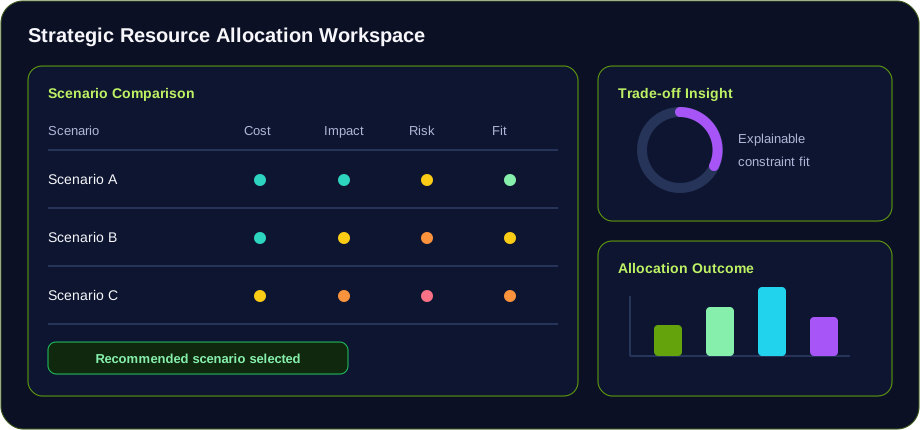
Allocate resources, compare strategies, model trade-offs, and select the strongest scenario.
Coordinate reviews, approvals, investigations, notifications, and operational actions.
Track performance, status, compliance, quality, assets, and service delivery.
Bring insights, recommendations, and natural-language analysis directly into existing applications.
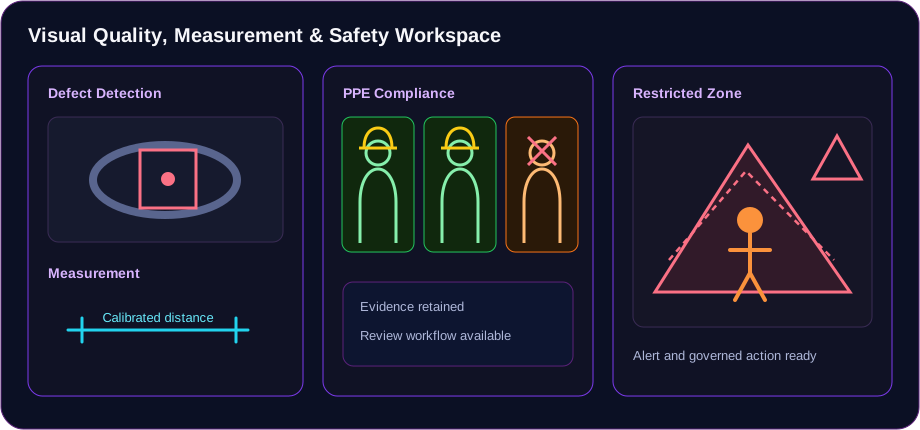
Detect defects, perform calibrated measurement, and monitor PPE, restricted zones, proximity, dwell time, and movement.
Verify PPE and safety conditions, define restricted zones, and produce evidence-backed alerts.
REAL SOLUTION EXAMPLES
Selected implementation patterns that show how ForgeLab capabilities solve real operational problems across functions and industries.
Implementation patterns validated across industries and use cases.
Combine the right products to solve specific problems.
Drive efficiency, quality, compliance, and better decisions.
Built with governance, security, and auditability from the start.
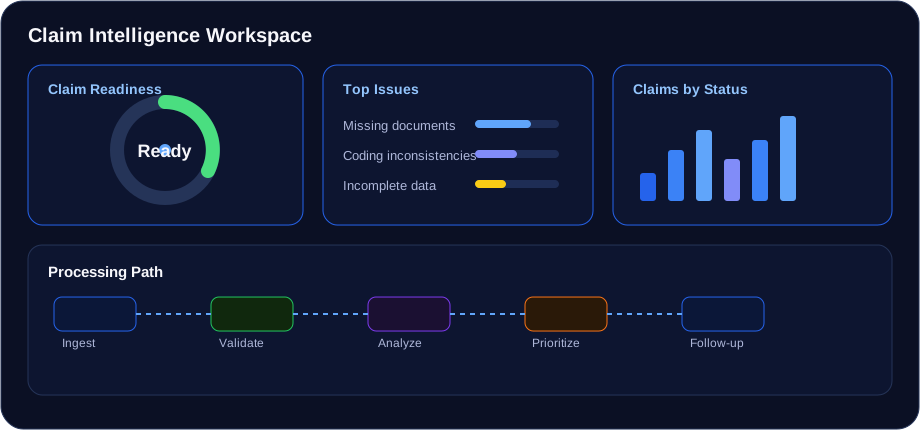
Claim information is fragmented across SIMRS data, medical documents, coding information, and administrative requirements.
Ingest claim bundles, validate document completeness, analyze coding inconsistencies, surface claim readiness, and prioritize follow-up.
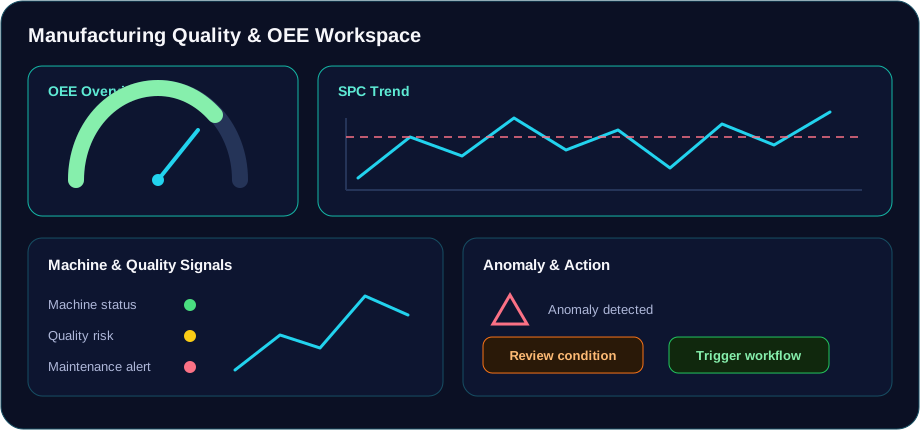
Machine signals, production data, quality measurements, and maintenance information exist in separate systems.
Acquire machine data, monitor OEE and SPC, detect anomalies, analyze quality risk, and support maintenance decisions.
Manual visual inspection and safety monitoring can miss defects, dimensional issues, missing PPE, and restricted-zone events.
Analyze images or live video to detect and localize defects, measure calibrated dimensions, verify helmets or vests, monitor safety zones, proximity, dwell time, and restricted-area movement, retain evidence, and trigger governed alerts or workflows.
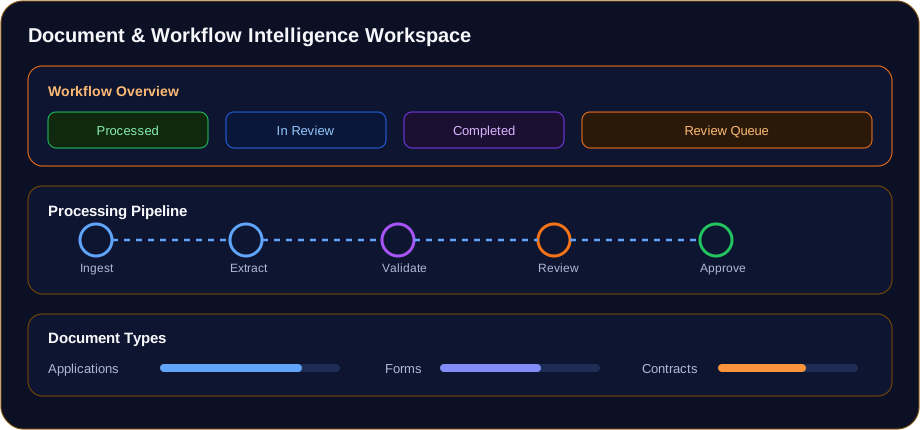
High-volume documents must be collected, classified, extracted, checked, and reviewed.
Build searchable document pipelines, extract structured information, validate requirements, and coordinate review workflows.
Teams must allocate budgets, capacity, people, or inventory while balancing multiple objectives and constraints.
Compare scenarios, evaluate stakeholder impact, explain trade-offs, and recommend an optimal allocation strategy.